Home Inspections
The most important things home inspectors consider when providing their service:
01
Grading
Inspectors are looking to see how the water will drain. Is it draining away from the house? If
not, they will probably suggest rain gutters to divert water away from the house’s structure.
02
Roof
Inspectors will take a serious look at the roof. They will probably estimate the remaining life of
the roof and note any maintenance issues.
03
Pumping
a. Sewer
A home inspector will run faucets, flush toilets, fill and drain baths and run appliances.
b. Water
They will look for draining issues under sinks and other exposed areas (crawl spaces and basements). They will
also, make sure everything runs properly and drains properly.
04
Electrical
a. Panel
All inspectors will take off the electrical panel or they will note in their report that they were
not able to gain access and further investigation is warranted. They look to make sure all the electrical
wiring is to code.
b. Sockets – wiring through the house
Anything that is not to code should be disclosed in their report. They will test
multiple if not all, outlets to make sure they are properly wired. They look to make sure Ground fault
circuit interrupters (GFCI) are properly located and in good working order.
05
Heating System(s)
There may be multiple systems in a house. Home inspectors will make sure all
systems are operating properly or disclose any issues. In a forced air system they test temperatures at
vents to make sure all areas are heated properly. They will note the age of the system. Also, they will note
any required or preventative maintenance needed now or in the future. In the system looks dirty they
will suggest servicing. It is always a good idea to change the filter when selling a home.
06
Central Air Conditioning
(weather permitting) They will always test the A/C system of the
house.
07
Foundation
They will note the type of foundation; age; condition; and if they noted any issues with
the foundation
08
Structural
Home inspectors always look at the structure of a home. How is it built; what year was it
built; Are floors level; and, are walls plumb? They will always note further investigation is suggested if
they see an issue.
09
Attic and crawl space
These two spaces are an important part of any home inspection. These spaces
are not visited often, if at all. However, these are places where issues can present themselves.
Inspectors look at the following when looking at these spaces: the structure, wiring, installation, proper
venting, and any code or safety issues.
10
Appliances included in the contract
An inspector will run, test, and examine all appliances included in
the purchase and sale agreement.

It is important to note that inspectors are not guarantors of house condition. In fact, most home inspectors limit any potential liability to the fee they were paid for the inspection (it is important that you read the home inspection contract carefully). They are not an insurance company.
An average home inspection fee for an average home is about $500.
Home inspectors are happy to quote fees for their service. They are not an insurance company. They are hired by the buyer to inspect a house. The report is the owned and controlled by the buyer. No one else has claim to the report. Most of the time sellers do not want to know what is in the report. This is because once a seller
knows what is on the report, they are potentially obligated to disclose the issues to other potential
buyers.
A seller is only obligated to disclose material issues that they know about. Of course, a seller is unable to disclose issues they do not know about. In fact, there is specific language in the inspection terms of the contract limiting the buyer’s right to give a seller any findings from “the buyer’s” inspection report unless specifically request by the seller.
Home inspections last about two hours. At the time of the inspection the inspector welcomes his
client’s (the buyer’s) to the inspection. The inspector will give them a contract to review and have it
signed before the inspection ends.

Typically, the buyer has 10 days to inspect a property. Inspection time frames are negotiated but the contract specifies 10 days, if the space is left blank. Day one of this time frame starts the first full day of a mutually accepted contract. Mutually Accepted is when both the buyer and seller have signed the contract and agreed to its terms.
At the end of the specified time frame the buyer must have the inspection completed, report issued, report reviewed by buyer, and a inspection response form delivered to the seller. Time moves quickly during the inspection period and it is important to get the physical inspection done as soon as possible.
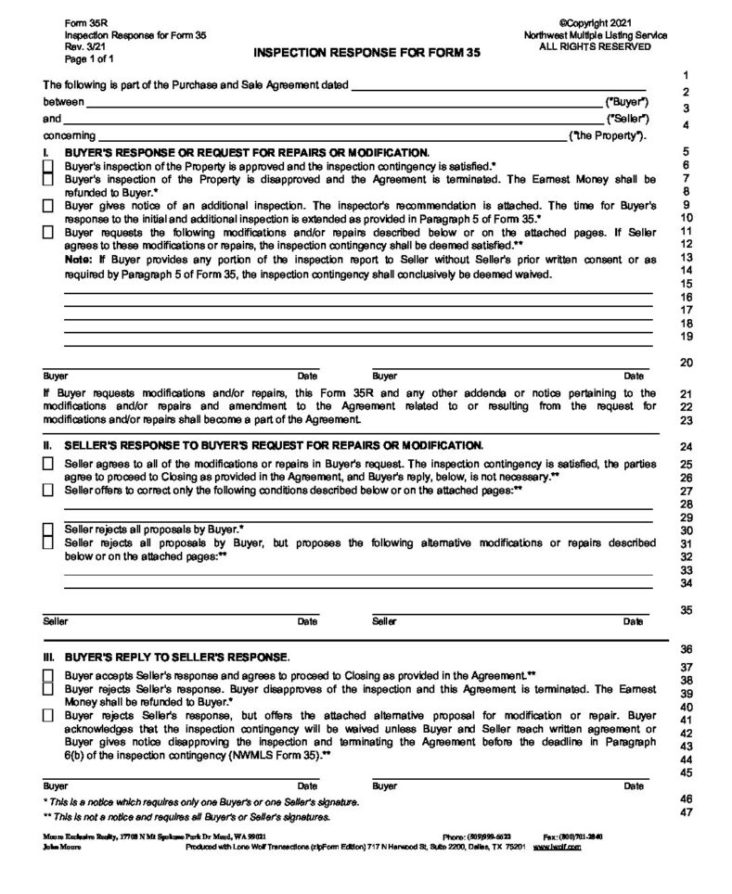
After the home inspector’s report is review by the buyer an inspection response form (Form 35R) is
prepared signed and delivered to the seller. The buyer responds in one of three ways on this form:
1. The buyer accepts the property “as is” and is moving forward with the transaction and is
removing the inspection contingency from the contract.
2. Buyer does not want to purchase and is terminating the contract.
3. The Buyer wants to move forward but request the following repairs, fixes, or other
consideration.
If item 3 above is selected, the seller has to decide what they are willing to do, if anything, and fill out the response form accordingly. This response then goes to the buyer to decide what they are willing to accept. If the buyer and seller can not agree the buyer must timely terminate the agreement based upon the home inspection to have their earnest money returned.